
Japan is a rare city in the world where foreign cuisines have taken root, and it has a culture of unique arrangements of various cuisines. Among these, curry is a dish that has been established for a long time and has evolved in various ways.
Originally an Indian dish, curry was eaten by foreign students on their way to the U.S. in the early Meiji period (1868-1912), and curry powder was later brought to Japan from England, where it took root and developed. According to an NHK educational program, Japanese curry is said to have exploded in popularity because of its English taste and thickening.
Incidentally, it is said that Indian curry was brought to Japan by Indians who moved to Japan after English curry arrived in Japan, and that famous restaurants in Higashi-ginza and「 Shinjuku XX-ya」 are said to be the originators.
In the old days, one of the most popular Japanese souvenirs to bring back to Korea was Japanese curry powder. Originally, there was no curry powder in Korea, so it was a very popular Japanese souvenir.
Curry powder alone is available from companies such as SB Foods, House Foods, and Glico, and House Foods alone has a full lineup of curry powder, including “Vermont Curry,” “Java Curry,” and “Kokumaro Curry,” with flavors ranging from sweet to dry. Each family has its own “mother’s taste,” such as its own blend of curry powder or the addition of chocolate or coffee as an accent. Therefore, to distinguish thick curry from Indian curry, it is even described as “Japanese-style curry” in foreign countries, as if it were classified as a Japanese dish called Western food. Incidentally, I remember when I was a child, I went to the local supermarket to run an errand and saw a woman who worked at a nearby Western-style restaurant buying curry powder in such large quantities that I realized that the curry at the restaurant was a blend of curry powder made by a certain food manufacturer. I once realized that Japanese curry powder is that good. I think this is how excellent Japanese curry powder is.
Kanda and Jimbocho are also fierce battlegrounds for curry specialty stores, and if you go to a curry store, you will find a variety of curry shops, from Indian curry shops to Japanese-style curry shops and European-style curry shops. Curry toppings include pork cutlets, croquettes, hamburgers, omelets, etc., and there are also restaurants that offer a variety of curry tastes, such as extremely spicy, meaty, with shredded cabbage, seafood, etc. We are sure that you will find your favorite restaurant among them.
Curry itself is also changing. For example, there are unique curries such as Hokkaido’s “soup curry,” yaki curry, and “Osaka spice curry,” as well as local curries that make use of various regional specialties, such as Chiba Prefecture’s mackerel curry and Yamagata Prefecture’s cherry curry, which were featured in a TV drama.
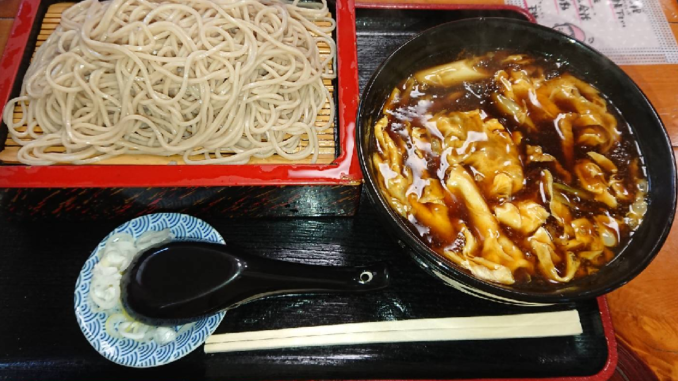
The first such fusion of curry and Japanese food in Japan, which has a history of nearly 200 years, would be “Curry Udon. It is said that the original “Curry Udon” was created at “Misasa-an” in Waseda, Tokyo, by the owner, Asajiro Kato, who was influenced by the popular curry rice of the time and thought that “udon and curry would go well together. Today, curry udon has evolved into “curry soba,” “dipping curry nanban,” “cutlet curry udon,” and so on.
Since then, many different arrangements of curry have been created in Japan.
Curry doria” has become a standard item on family restaurant menus. First of all, did you know that “doria” originated in Japan? When curry is added to it as an accent, it combines with white sauce to create a mild curry.
Pizza and pasta also have a curry flavor, and curry arrangements have been added mainly to Western-style flavors. Curry hot pots, curry oden, curry chanpon, and other dishes have also been created, and we can expect more curry-based arrangements to emerge in the future.
Well, let’s make curry today.